
Compliance documentation starts before anyone asks to see it.
Facilities often have the right work happening but the supporting record is scattered across paper logs, email attachments, vendor reports, shared drives, spreadsheets, and individual memories. The problem becomes visible when management, an auditor, or a surveyor asks a simple question: what happened, when did it happen, who handled it, and what evidence supports the answer?
A better approach connects documentation to the work itself. Recurring responsibilities should produce separately trackable occurrences. Each occurrence should retain its Activity, structured inspection responses, photographs or files, vendor documentation, completion information, and any linked corrective responsibility.
Think in layers instead of one giant compliance file.
The operating record
The individual Work Order or Scheduled Task should show what was due, what happened, who was involved, what was recorded, and what files were retained.
The review record
Running logs, recurring management review, and evidence packages reorganize the operating record for different oversight needs without replacing the underlying task history.
This distinction matters. A running log answers a different question than a monthly management review. An indexed evidence package answers a different question again. Trying to make one document serve every purpose usually makes all three harder to use.
In REQQER, those layers remain distinct.
Task Logs organize selected electronic-form responses over time. Compliance Review gives a Facility Administrator a recurring monthly review of selected regulatory Scheduled Tasks and their documentation. Log Books assemble selected recurring work, forms, and supporting documents into an indexed evidence package.
Do not let unresolved work disappear just because the inspection is complete.
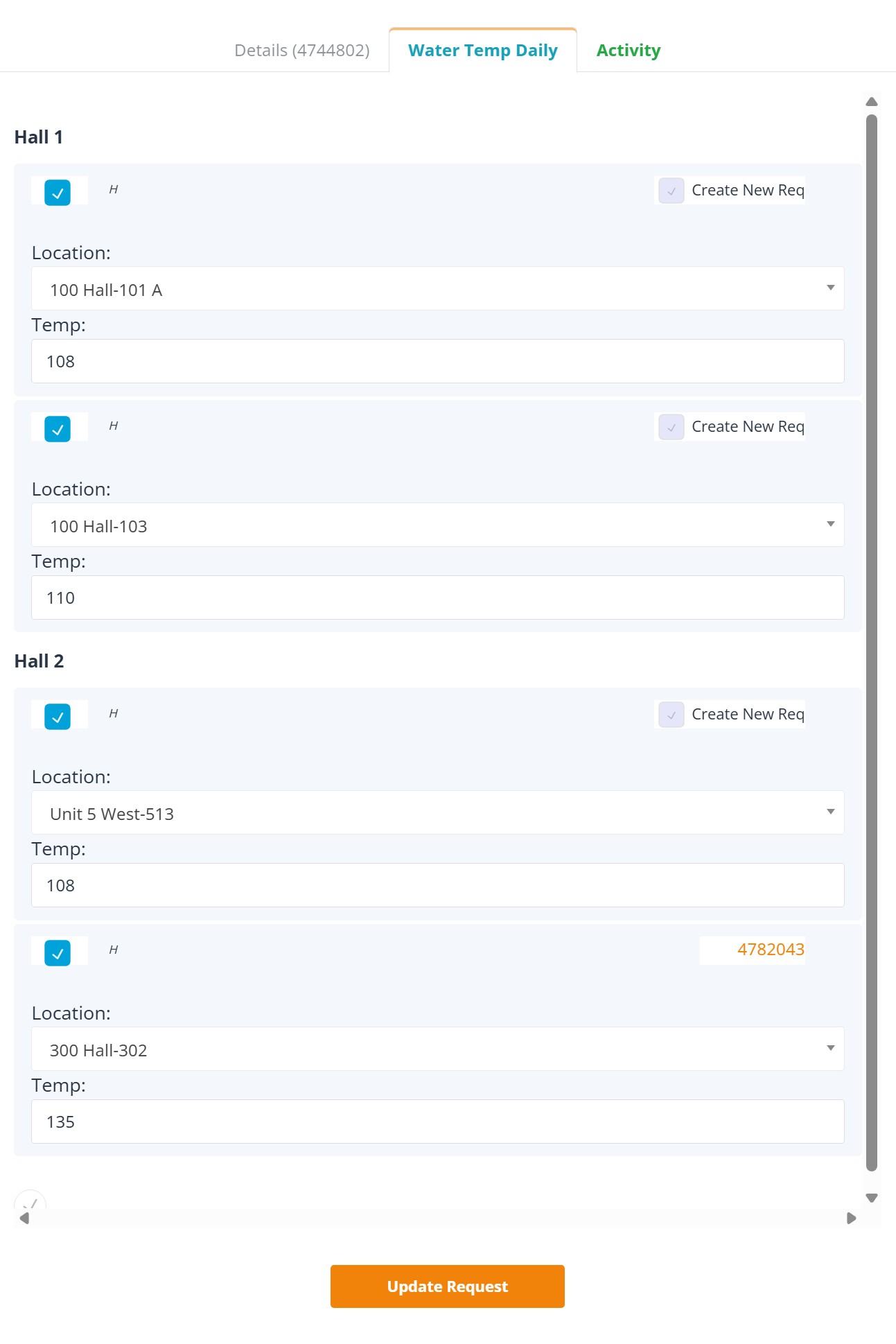
Documentation is most useful when it preserves both the completed inspection and the unresolved condition it discovered. If the original task is closed and the deficiency is only written inside the form, the organization may lose visibility into the correction.
A stronger corrective-action model keeps the finding linked to its source while giving the corrective work its own status and lifecycle. That allows the inspection record to remain complete while the corrective responsibility stays Open until it is actually resolved.
Evidence should reveal gaps, not hide them.
A polished report is not necessarily a useful compliance record. If missing readings, incomplete responses, late work, or absent documentation are silently omitted, management gets false reassurance.
Useful systems keep exceptions visible. Running logs should make blank or partial entries noticeable. Review workflows should include unresolved work. Evidence packages should represent the selected recurring responsibilities rather than showing only the easiest completed examples.
The goal is not to make the record look perfect. The goal is to make the actual state of the work clear enough that incomplete items can be found, corrected, and explained.
Questions to ask when evaluating compliance documentation software.
- Does documentation stay connected to the individual task that produced it?
- Can electronic forms capture structured readings, acknowledgments, and required responses?
- Can a finding create separately trackable corrective work without losing the original inspection context?
- Can vendor reports, certifications, photographs, and other files remain with the work?
- Can management review Open as well as Closed recurring work?
- Can running logs expose blank or partial entries rather than hiding them?
- Can selected records be reorganized into an indexed evidence package when needed?
Compliance responsibility remains with the organization.
Software can support documentation, review, and follow-through, but it does not determine which federal, state, local, accreditation, or organizational requirements apply. Those requirements should define the work your system is expected to track.