
Use this as an operating checklist—not a regulatory checklist.
Every nursing facility has its own building, equipment, services, state requirements, survey history, corporate standards, and risk priorities. A public checklist cannot determine which inspections or frequencies your facility is legally required to perform.
What it can do is provide a framework for asking whether the maintenance program is organized well enough to receive work, schedule recurring responsibilities, preserve documentation, identify deficiencies, and show management what still needs attention.
Start with the work your organization is already responsible for.
Then make sure each responsibility has a clear owner, schedule when appropriate, operating record, supporting documentation, corrective path, and review process.
1. Can staff report one-time facility issues easily?
- Room and resident-area issues have a clear request pathway
- Common-area and building problems can be entered without relying on hallway conversations
- Requesters can describe Location, Item or equipment, urgency, and the problem
- Photographs and supporting files can stay with the request
- Maintenance can distinguish Open, On Hold, assigned, and completed work
Easy intake matters because unreported work cannot be prioritized. The reporting method should fit the requester: full maintenance users may work in the main system, while ordinary staff may need a simpler browser-based request path.
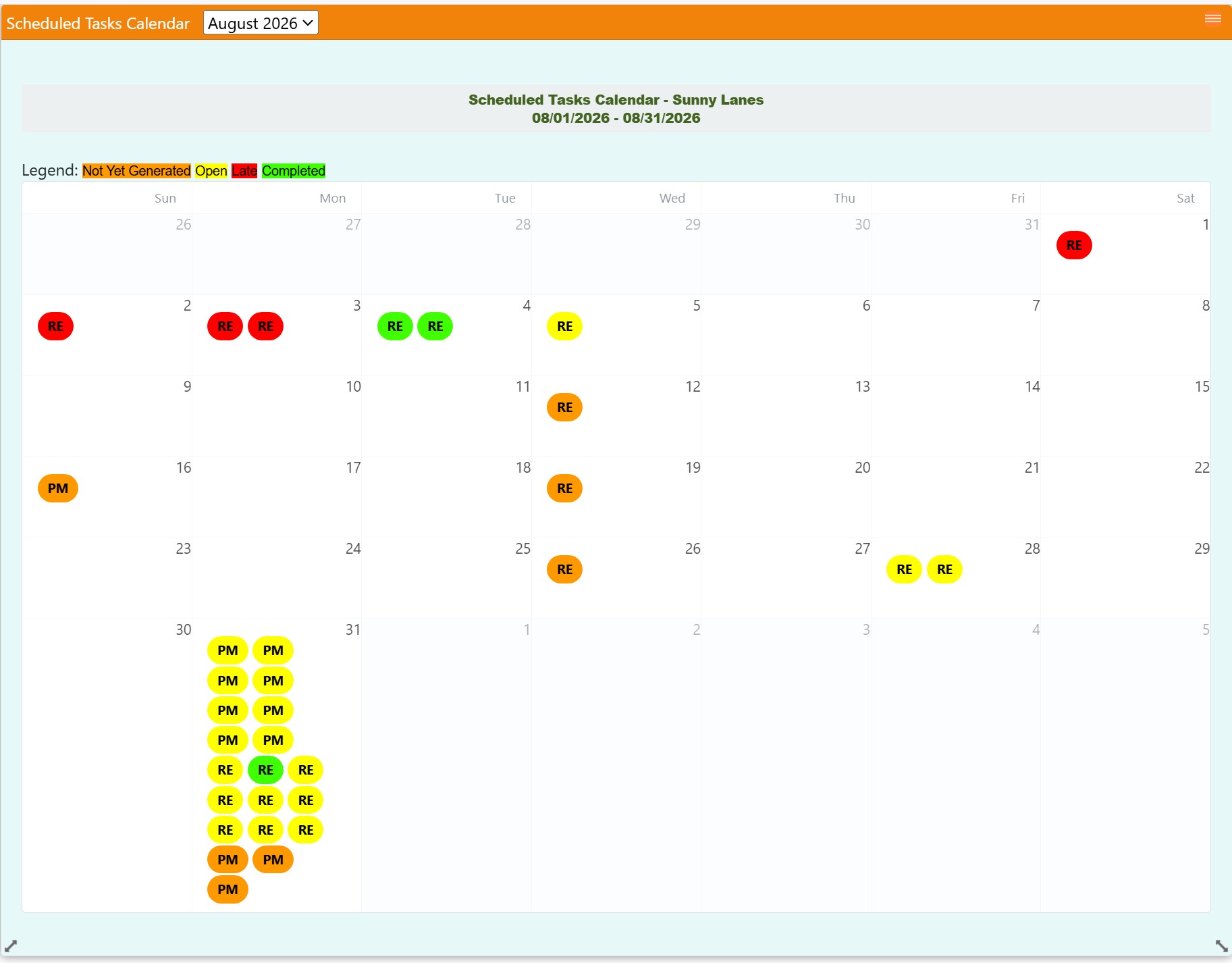
2. Are recurring preventive and regulatory responsibilities scheduled separately from reactive work?
- Recurring responsibilities have defined frequencies and Due Dates
- Each occurrence creates its own work history rather than overwriting the previous month
- Staff can see upcoming work before the Due Date when advance notice is useful
- Assignments, forms, documents, and vendor relationships can follow the recurring definition
- Late recurring work remains visible alongside day-to-day Work Orders
3. Do inspections create usable records and accountable corrections?
- Inspection forms collect the readings, acknowledgments, and responses the task actually requires
- Required information is identified before the task is closed
- Supporting photographs or files remain tied to the inspection record
- Problems discovered during an inspection can become separately trackable corrective work
- The corrective work remains linked to the inspection that identified it
The goal is to avoid a common failure mode: the inspection is marked complete, but the problem described inside it is never given a separate owner or status.
4. Is vendor work documented with internal oversight?
- Outside contractors can be identified separately from the Internal Assignee responsible for follow-up
- Proposals, reports, certifications, invoices, and photographs can stay with the Req
- Questions and replies can be preserved as Activity
- Delayed vendor work can remain visible instead of disappearing into email
- Internal staff can confirm that required documentation was received before closing the work
5. Can management review the record without reconstructing it?
- Running logs can organize recurring form responses by date
- Blank or partial responses remain visible
- Selected recurring records can be assembled into an organized evidence package
- Administrators can review selected regulatory work on a recurring management cycle
- Late, Safety, On Hold, and aging work can be surfaced in dashboards or reports
- Regional or corporate users can review multiple facilities without losing facility-level detail
Pick one important recurring responsibility from three months ago. Can you quickly show the task, who handled it, the completed form, supporting documentation, any identified deficiency, and whether that corrective work was resolved?
6. Does the program make gaps easier to see?
Maintenance systems should not merely store records. They should help the organization notice when something expected is missing, late, incomplete, under-documented, or still awaiting corrective action.
That is especially important in nursing facilities, where daily service requests continue at the same time as preventive, life-safety, inspection, vendor, and documentation responsibilities.