
Standardization should create comparability, not rigidity.
Multi-facility organizations often inherit different naming conventions, spreadsheets, paper logs, calendars, and local habits. The first instinct may be to force every facility into an identical list of tasks. That can create a cleaner spreadsheet while making the actual program less realistic.
A better approach standardizes the underlying structure—how recurring work is defined, how occurrences are documented, how overdue work is identified, and how evidence is reviewed—while allowing facility-specific details where they genuinely differ.
Keep recurring definitions local enough to remain operational.
Each facility still needs concrete recurring work: the correct Location, Item, frequency, Next Date, assignment, form, documents, and other applicable requirements. The individual occurrence should become a separate work record so management can see what happened at that facility rather than only knowing that a master schedule exists.
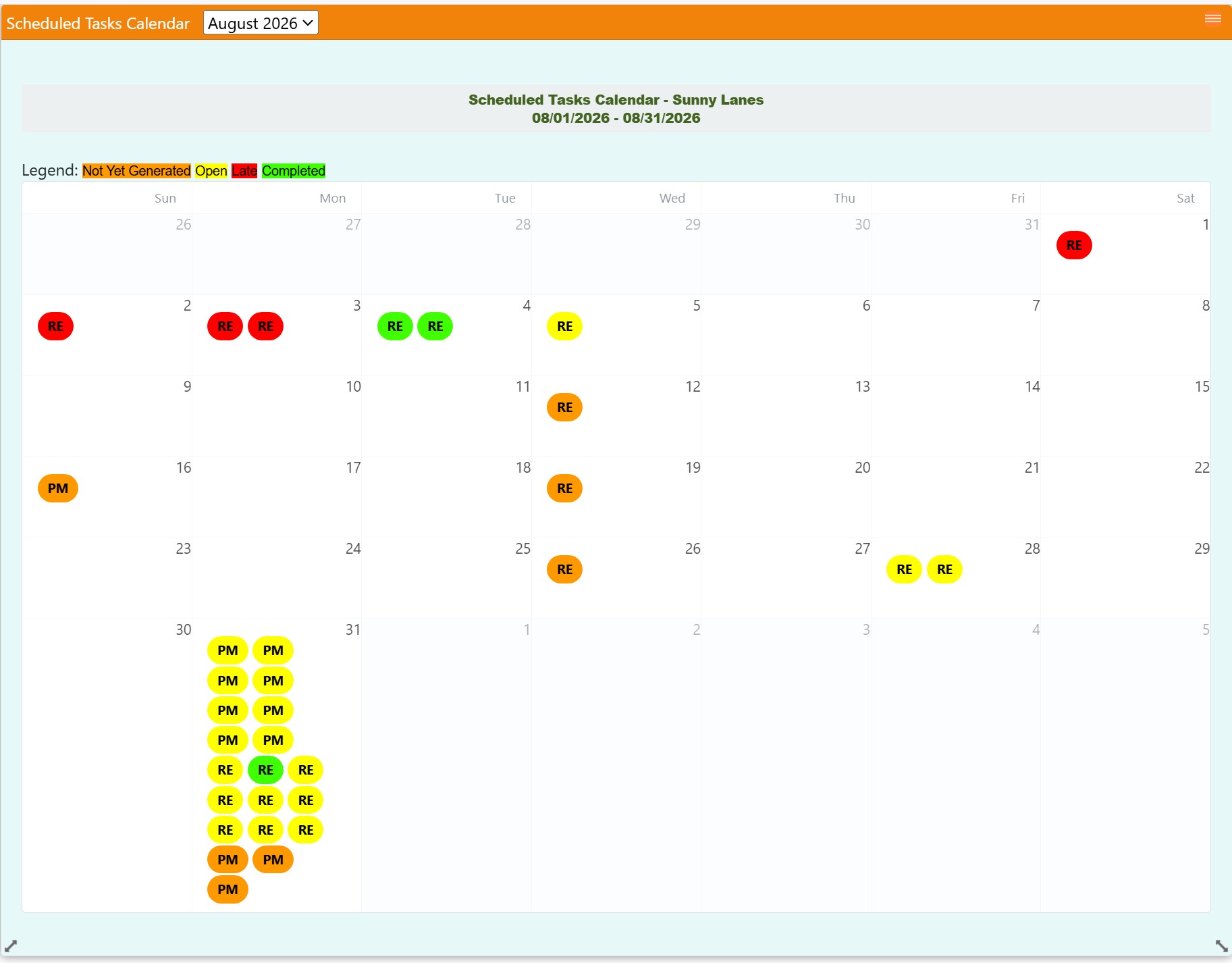
Build organization-wide visibility from consistent local records.
Once each facility is documenting work through the same basic lifecycle, regional or corporate leadership can compare facilities, focus on selected locations, and review the recurring program without replacing the facility-level operating view.
This is where a multi-facility system becomes more than several separate maintenance accounts. Leadership can use the common record to see where work is late, where workload differs, and where follow-up or documentation may require attention.
A practical framework for multi-facility PM.
Questions to ask during rollout
- Which responsibilities should be common across all facilities?
- Which details genuinely vary by building, jurisdiction, equipment, or operating model?
- Can each occurrence be tracked separately at the facility level?
- Can leadership review multiple facilities without destroying local context?
- Can recurring documentation and forms stay attached to the work that produced them?