
A digital log should answer more than “what value was entered?”
Paper logs are familiar because they put dates down one side, expected checks across the top, and signatures or initials beside the result. When organizations digitize those logs, the most important goal is to preserve the questions people later ask: What was recorded? When? By whom? Was anything skipped? Was the task itself completed? Did a problem create follow-up?
Digitizing the form is only the first step.
The stronger design captures information as part of the actual maintenance or inspection workflow, then reorganizes those responses into the running log people expect to review.
Four characteristics of a useful digital maintenance log.
1. Date-based history
The log should make it easy to scan values over time instead of opening one form after another.
2. Meaningful signoff
The person who completed the work should remain part of the record, rather than being replaced by an anonymous timestamp.
3. Visible blanks and partials
Missing information should not silently disappear just because the report is electronic.
4. Connection to the source work
The running log should be a view of the operational record, not a disconnected second database that staff must maintain manually.
What this looks like in REQQER Task Logs.
REQQER Task Logs organize selected electronic-form responses into a date-based running log. Dates appear as rows, selected response fields become columns, and the Signoff identifies the person who completed the Req. Blank or partial cells stay visible instead of being hidden.
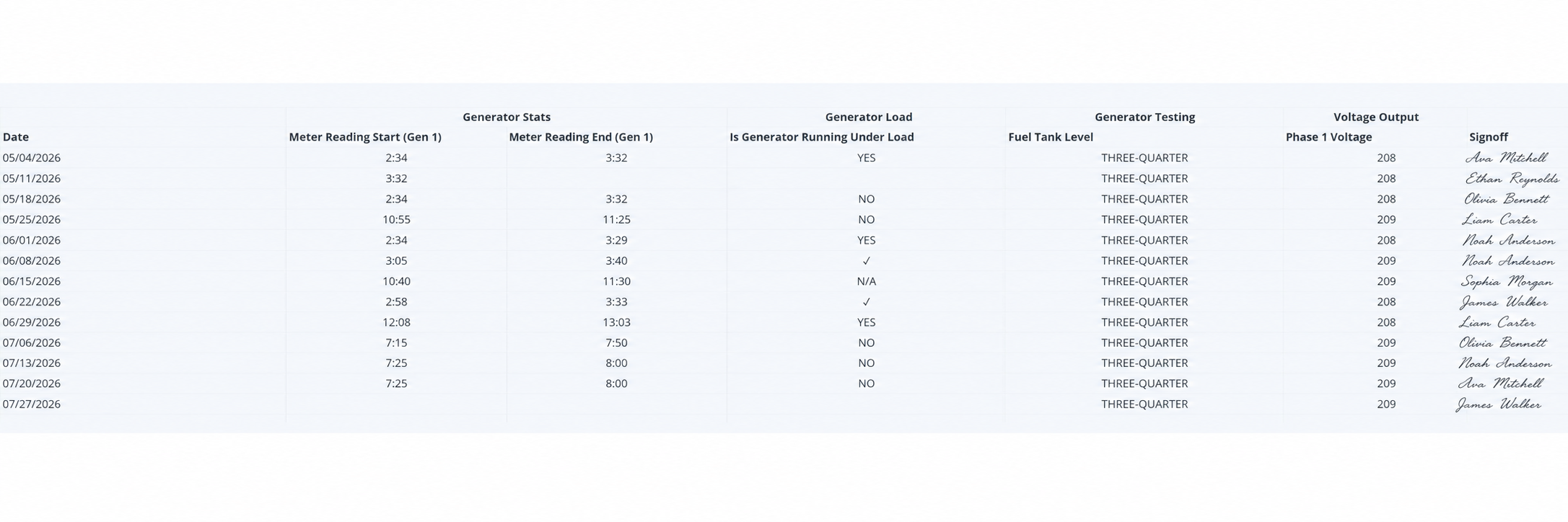
Public-facing anonymized example. Fictional signoff names are used in place of customer data.
That matters operationally because a digital log can become a management tool—not just a prettier archive. A blank response, partial form, unusual reading, or linked corrective Req can direct attention back to the underlying work.
Digital logs and evidence packages serve different purposes.
A running Task Log is useful for scanning recurring values over time. A broader evidence package may need the underlying Req, completed form, vendor report, scanned document, and other attachments organized together. In REQQER, Log Books serve that second purpose for selected recurring tasks.
A Task Log helps answer “What has this reading looked like each week?” A Log Book helps answer “Show me the documented work and supporting records for the recurring responsibilities in this period.”