
The difference begins with why the work exists.
Work Orders respond to a need.
A leaking faucet, broken light, damaged door, room issue, service request, or other one-time responsibility appears because something needs attention now.
Preventive maintenance starts with a plan.
A recurring inspection, test, cleaning, lubrication, generator exercise, filter change, or other scheduled responsibility exists because the organization has decided it must happen repeatedly.
The distinction matters because a one-time request normally ends when that specific issue is resolved. A recurring responsibility needs a persistent schedule capable of producing the next occurrence without erasing the history of the one just completed.
Why recurring work should create separate occurrences.
One common design mistake is to keep editing a single “monthly generator” record forever. That makes it harder to answer basic questions later: Was January completed? Who did March? Was the April inspection late? Which occurrence had the failed reading?
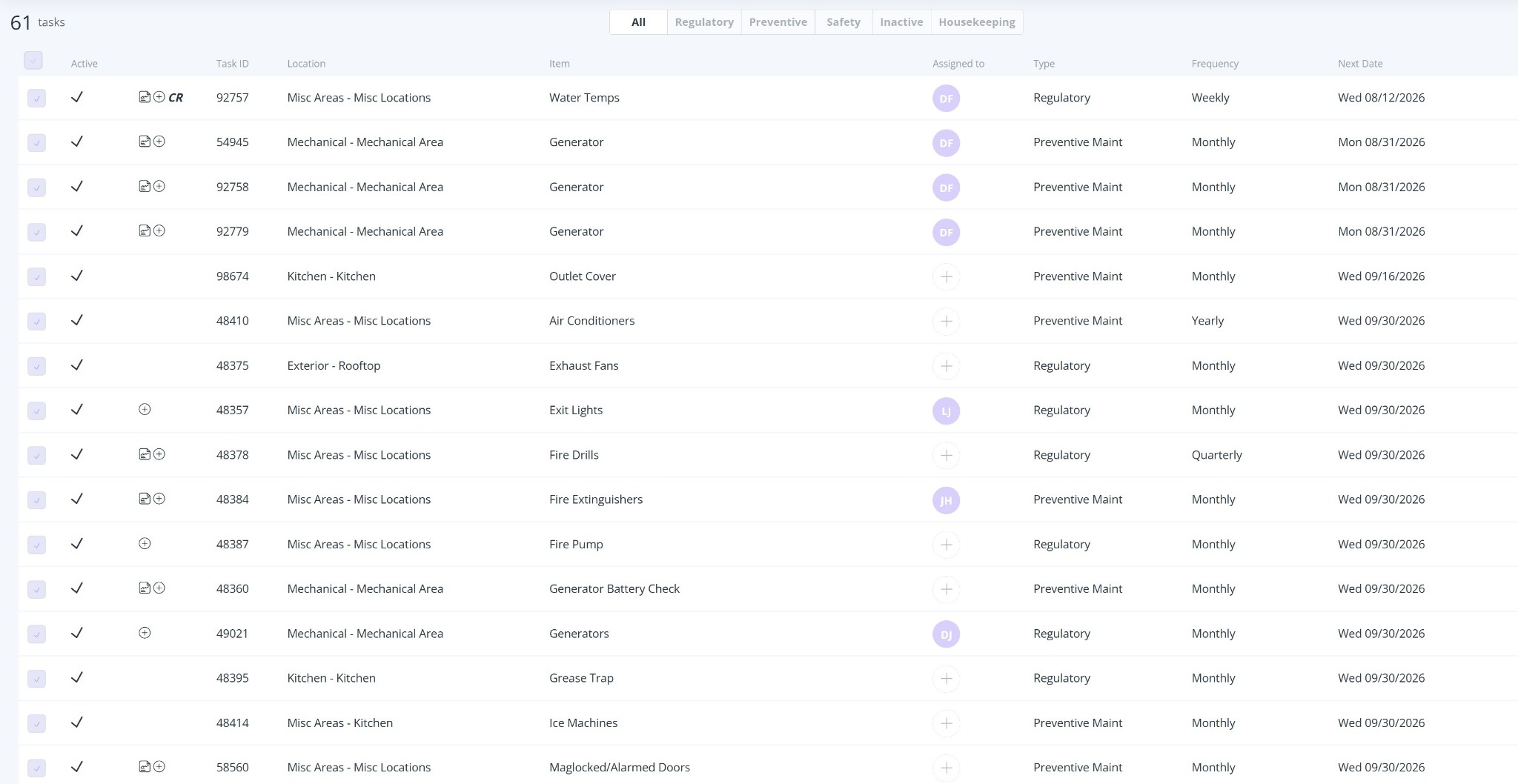
A stronger model keeps the recurring definition separate from the individual work occurrence. In REQQER, the Scheduler stores the recurring instructions while each generated occurrence becomes its own Scheduled Task with its own Due Date, assignment, Activity, forms, documents, and completion history.
Why both still belong in the same operating system.
Different origins do not mean separate management systems. Facility staff still need to prioritize work, assign responsibility, record Activity, add documents, coordinate vendors, see what is Open, and report on what happened.
The practical goal is to preserve the distinction between reactive and recurring work while giving the team one place to manage the resulting Reqs. That makes it possible to see whether urgent one-time issues are crowding out planned responsibilities—or whether preventive maintenance is creating the stability it was intended to provide.
A tenant reports a leaking sink through Quick Entry. That creates a one-time Work Order. Separately, the building's monthly generator inspection comes from the Scheduler as a Scheduled Task. The two pieces of work have different origins, but both can be prioritized, assigned, documented, and reviewed from the same Requests Console.
Questions to ask when evaluating maintenance software.
- Does recurring work create a separate history for every occurrence?
- Can staff distinguish one-time Work Orders from Scheduled Tasks in lists and reports?
- Can both types of work carry Activity, documents, assignments, and Work Duration?
- Can inspections and forms remain tied to the individual occurrence that produced them?
- Can leadership see both reactive and recurring workload without combining them into an ambiguous total?